FLUENCY PLUS: Comprehensive Treatment for School Aged Children Who Stutter
Instructional Level: Introductory Level
Target Audience: Speech-Language Pathologists or CDAs/SLPAs working with school age children (ages 10 and up) who stutter.
Location: Synchronous Live Webinar on Zoom (Link to be sent to participants 2 days before course start date)
ASHA CEUs: 1.5 (mandatory to attend all days to receive CEUs)
Early Bird Rate: Before Jan 19th
$675 CAD | $485 USD
Standard Rate: After Jan 19th
$750 CAD | $540 USD
Groups of 4+: Per Person
$600 CAD | $425 USD
Fees include a PDF of client manual and set of clinician’s program notes
We will send you an email with information regarding payment of registration fees. Complete the registration only if you have plans to register and attend all 3 days.
This highly interactive workshop provides comprehensive training on one treatment approach – The Fluency Plus Program for School-Aged Children & Teens Who Stutter (ages 10-18). This workshop will include both small group skill practice with instructor feedback as well as large group learning. The Fluency Plus Program is a fluency shaping approach to treatment with the inclusion of cognitive restructuring goals to reduce negative thoughts and improve confidence in speaking situations. Due to the stretched syllable as the foundational skill of this program, it is not suitable for a child under the age of 10, or a child with special learning needs who is not functioning at grade level. A brief discussion about adaptations for clients with these needs will be provided.
Workshop participants will be provided with a detailed client manual (which can be shared with clients), clinician’s guide, helpful parent and teacher handouts, an intake questionnaire and audio recordings of fluency skills.
Day one begins with the nature of stuttering, pre-treatment considerations and the components to a comprehensive fluency assessment. Participants will learn about the three phases of the Fluency Plus Program, and begin learning fluency shaping skills including respiration, rate control (at exaggerated speech rates) and voice onsets. Lots of Intensive skill practice will be offered in small groups with instructor feedback.
Day two focuses on more fluency enhancing skills including reduced articulatory pressure, further rate manipulation, constant phonation and articulatory movements. Participants will have the opportunity to learn the skills in the large group and practice in small groups with instructor feedback, client video demonstrations and Q & A for hands-on learning.
Day three will address transfer of fluency skills into real life speaking situations and the psychology of stuttering/challenging negative thoughts about speech. Participants will learn how to set cognitive restructuring goals, apply cognitive restructuring techniques, set goals for transfer and maintenance, plan engaging therapy activities, target therapy goals through various treatment activities, assign home practice activities, communicate with parents, and problem solve difficulties clients may encounter. Participants will also learn how to adapt the program for those not ready for such an intensive treatment program. Throughout the workshop, each topic is explored through practical strategies, with opportunities for large and small group discussion and Q&A. Day one and two are heavy on small group skill practice, with day three involving more large group lecturing.
Customer satisfaction is a top priority at the Speech and Stuttering Institute. As a customer, it is your responsibility to pay the necessary fee and supply a credit card for fee payment.
Complaint Policy: Please send an email to SSIASHA@speechandstuttering.com and include a detailed summary of your questions, comments, and/or concerns you may have, along with your full name and contact information within 30 days of course completion.
Cancellation Policy: You may place cancellations by emailing SSIASHA@speechandstuttering.com For a full complaint + cancellation policy, see here
Primary Speaker Bio and Disclosures
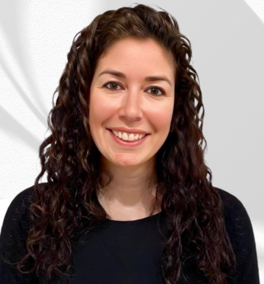
Marni has been practicing in fluency disorders since completing her Master of Health Science degree from the University of Toronto. She began her career treating children in the school-system; however, shortly after, she joined The Speech & Stuttering Institute to pursue her passion of helping individuals who stutter. At the Institute, Marni serves as the Team Leader of the Stuttering Program, where she has worked exclusively with people who stutter since 2008. She enjoys providing group and individual treatment programs for school-aged children, adolescents and adults who stutter. For many years, Marni has served as a fluency adjunct lecturer and Clinical Educator for SLP Masters’ students at the University of Toronto. She has extensive training in the use and application of the Fluency Plus Program, and she has delivered multiple fluency training workshops to practicing clinicians. Marni has assisted many stuttering research projects (in the areas of motor learning and the Fluency Plus Program) and has presented on Fluency Plus at a provincial conference.
Marni Kinder has the following relevant financial and non-financial relationships to disclose:
Financial Relationships
- Speech-Language Pathologist & Stuttering Program Team Leader (full-time) for The Speech and Stuttering Institute, Toronto, Canada
Non-Financial Relationships
- Member of Speech-Language and Audiology Canada (SAC)
- Member of College of Audiologists and Speech Language Pathologists of Ontario (CASLPO)
- Adjunct Lecturer – University of Toronto
- Clinical Educator – University of Toronto
Learning Outcomes
By the end of this course, attendees will:
- Classify treatment in the broad context of behavioural, cognitive, emotional, and psychosocial aspects of stuttering
- Identify the components of a comprehensive stuttering assessment
Explain and deliver the three phases of the Fluency Plus Program: Establishment, Transfer, and Maintenence
- Demonstrate and model six fluency facilitating skills at four different rates of speech
- Select appropriate and engaging therapy activities to target treatment goals
Certificate of Completion Requirements
To get the Certificate of Course Completion and/or ASHA CEUs, course participants must:
- Attend the full duration of the course (attendance will be tracked automatically).
- Complete a test based on learning outcomes and receive a score of >80%.
- Complete a post-course online program evaluation survey.
DEADLINE: Complete the test and post-course program evaluation survey by Friday, February 13th, 2026 – 11:59 PM EST
Three Day Agenda:
09:00 – 09:05 Registration and Welcome
09:05 – 10:20 Nature of Stuttering and Pretreatment Considerations
This section introduces the components of a detailed assessment, the main approaches to stuttering treatment and eligibility criteria.
10:20 – 10:35 BREAK
10:35 – 11:20 Program Introduction and Full Breath Target
Response Progression, Stretched Syllable Target
This section introduces the phases of The Fluency Plus Program and the first two fluency shaping skills involving breathing and exaggerated rate reduction.
11:20 – 12:00 BREAKOUT GROUPS
- 9, 10, 11 (Full Breath Target)
- 15, 16, 17 (Stretched Syllable Target)
Participants will work in small groups with clinician feedback to practice fluency enhancing skills and how to deliver effective client feedback.
12:00 – 13:00 LUNCH BREAK
13:00 – 13:35 The Unstretchables, Continuous Reading, Conversation, Self-Correction
Participants will learn about sounds that cannot be stretched and continue to learn how to employ stretched syllables (rate reduction technique) in reading and conversation.
13:35 – 14:05 BREAKOUT GROUPS
- 20, 21 (words beginning with unstretchable consonants)
- 24 (practice phrases – FB and SS)
- 26, 27 (conversation practice – Q/As)
Participants will continue to practice fluency-enhancing skills in small groups with clinician feedback.
14:05 – 14:20 BREAK
14:20 – 14:50 Gentle Onset Target
This section will introduce the five steps to the gentle onset technique and various practice exercises from The Fluency Plus client manual.
14:50 – 15:35 BREAKOUT GROUPS
- 36 (vowel sounds)
- 38 (vowel initial words)
- 44 (mixed stretchable consonant initial syllables)
- 45 (mixed stretchable consonant initial words)
Participants will practice the gentle onset target in small groups with various sound classes.
15:35 – 16:00 Q & A
This section will review fluency skills taught previously and introduce the light contact skill for fricative and plosive sounds.
09:45 – 10:15 BREAKOUT GROUPS
- 48 (fricative syllables), p. 50 (plosive syllables), p. 54 (words – LC)
Participants will practice the light contact in small groups with clinician feedback.
10:15 – 10:30 BREAK
10:30 – 11:05 1 Second Stretched Syllable and Blending Target
This section will introduce how to gradually shape exaggerated speech rates into more natural rates of speech using the 1 second stretched syllable and blending techniques.
11:05 – 11:25 BREAKOUT GROUPS
- 56 (single syllable words – 1SS), p. 59 (bisyllable words – 1SS)
Participants will practice the 1 second stretched syllable rate and blending target in small groups with clinician feedback.
11:25 – 11:40 Continuous Reading and Transfer to Conversation
Participants will learn how to use and assist clients with the 1 second stretched syllable rate in reading and conversation.
11:40 – 12:05 BREAKOUT GROUPS
- 63 (Q/As), p. 64 (sentences), paragraph reading (read p. 66 out loud in 1 second stretched syllable)
Participants will practice the 1 second stretched syllable rate of speech in sentences and reading with clinician feedback.
12:05 – 13:05 LUNCH BREAK
13:05 – 13:45 Full Movement Target & ½ Second Stretched Syllable
LARGE GROUP PRACTICE
- 67 (word practice), p. 68 (sentence practice)
This section will teach the full mouth movement strategy and a faster rate of speech (1/2 second stretched syllable).
13:45 – 14:10 BREAKOUT GROUPS
- 74 (word), p. 79 (sentence), p. 81 (conversation)
Participants will practice Full Movement and ½ second stretched syllables in small groups with clinician feedback.
14:10 – 14:25 BREAK
14:25 – 15:00 New Normal Speech Rate
This section teaches participants how to use and model a natural speaking rate applying all fluency skills learned previously. Participants will also have the opportunity to view client video samples.
15:00 – 15:45 BREAKOUT GROUPS
- 85 (words with normalized assignment of stress)
- 98 (sentences with inflection for meaning)
- 99 (generating sentences), p. 101 (reading with expression)
- 103 (transfer to conversation)
- 104 (transfer to presentation)
Participants will practice use of New Normal (a natural speaking rate applying all fluency skills) at various levels of speech.
15:45 – 16:00 Q & A
09:00 – 09:05 END OF THE DAY REMINDERS
Test + Post Evaluation Survey
Certificate of Completion
09:05 – 10:00 Introduction to Transfer
This section involves a discussion on transfer procedures and records, mental rehearsal, lucky vs. monitored fluency and transfer activities. Client video demonstrations will be shown.
10:00 – 10:25 Introduction to Cognitive Restructuring
This section will discuss cognitive restructuring goals, problems encountered in transfer, the stuttering mentality, monitored speech output, challenging negative thoughts about speaking, and self-talk.
10:25 – 10:40 BREAK
10:40 – 11:00 Small Group Transfer Discussion
Participants will brainstorm ideas for transfer & cognitive restructuring in small groups.
11:00 – 12:00 Introduction to Maintenance Planning
This section will discuss the clinician’s role in maintenance, challenges, forms of practice, client tracking sheets and client video examples.
12:00 – 13:00 LUNCH BREAK
13:00 – 13:30 Fluency Plus Formats
This section will discuss the various formats of service delivery, delivery of this program via telepractice, pre- and post-treatment measures, program sequence and suggestions for therapy activities to target treatment goals.
13:30 – 13:55 Small Group Discussion – Therapy Activities
Participants will engage in small group discussion to brainstorm and share therapy activity ideas to target program goals.
13:55 – 14:10 BREAK
14:10 – 15:10 Group Vs. Individual Treatment
Family Involvement
The use of Video Recordings
The Younger Child, Teens & Adults
This section will discuss groups vs. individual treatment, the role of the caregiver, home practice, the use of video recordings, therapy modification and therapy approaches for a younger or older child.
15:10 – 15:20 Summary of Clinical & Research Findings
Video Examples
Wrap Up
Participants will learn more about clinical and research findings and view additional client video samples.
15:20 – 15:30 Q & A